
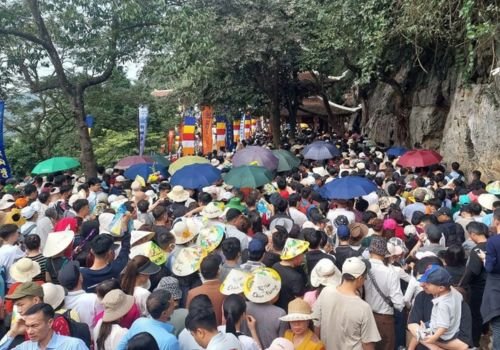
Every year, as the Lunar New Year approaches, Vietnam transforms into a country on the move. Families return to their hometowns, friends plan reunions, and millions of people travel to famous destinations to celebrate Tet. From sacred mountains to sunny beaches, the holiday season creates a travel boom that reveals not only Vietnam’s tourism strength but also its cultural heartbeat.
For learners on the “Vietnamese Language Journey,” understanding this phenomenon offers valuable insight into both language and lifestyle.
A Nation on the Move During Tet
Tet, the most important holiday in Vietnam, is more than a celebration—it is a powerful cultural tradition. During the first days of the new year, popular destinations such as Ba Den Mountain in Tay Ninh, Vung Tau’s beaches, Da Lat’s cool highlands, and Phu Quoc Island welcome hundreds of thousands of visitors.
Ba Den Mountain, often called the “Roof of Southern Vietnam,” attracts pilgrims who come to pray for luck and peace. Long lines form for cable cars, and roads leading to the mountain become crowded. Meanwhile, coastal cities like Vung Tau and Nha Trang see beaches packed with families enjoying the sea breeze and sunshine.
In the Central Highlands, Da Lat remains a favorite destination thanks to its mild climate and romantic scenery. Lakeside streets and cafés fill with tourists taking photos and celebrating spring. These scenes reflect how Tet blends spiritual traditions, relaxation, and modern tourism.
The Hospitality Industry at Full Capacity
The Tet travel surge significantly impacts Vietnam’s hospitality sector. In many cities, hotels and resorts reach occupancy rates of 80–95% during peak days. Four- and five-star hotels, especially in central areas, are often fully booked well before the holiday begins.
Phu Quoc Island, for example, has recorded remarkable growth in visitor numbers during Tet. Thousands of guests choose to stay overnight, and many accommodations report near-complete bookings. This pattern repeats in other destinations, demonstrating the strong domestic demand for travel experiences.
For travelers, this means planning ahead is essential. Booking rooms early is not simply a suggestion—it is a necessity during Tet.
Language in Context: Words Behind the Experience
For Vietnamese language learners, Tet travel offers useful vocabulary and cultural context. You will often hear phrases like:
- “du xuân” (spring travel)
- “hành hương” (pilgrimage)
- “cháy phòng” (fully booked)
- “ùn tắc giao thông” (traffic congestion)
These expressions appear frequently in news reports and daily conversations during the holiday. By learning them, students gain not only linguistic knowledge but also a deeper understanding of Vietnamese society.
Culture, Economy, and Communication
The Tet travel boom highlights the connection between culture and economics in Vietnam. Tourism generates significant revenue during this period, supporting local businesses, hotels, restaurants, and transport services. At the same time, the holiday reinforces family values, spiritual beliefs, and community bonds.
For language learners, observing how Tet influences communication—whether in media, advertisements, or casual speech—provides a living classroom. Vocabulary becomes meaningful when tied to real events and real emotions.
📌 Tet is not just a holiday. It is a national movement, a cultural celebration, and a powerful reminder that language lives within society. By understanding how Vietnam travels during Tet, learners take one more step forward in their Vietnamese Language Journey.
